
Commercial steel frame
Commercial Pilates reformers
Commercial Pilates reformers for strength studios, from $5,000
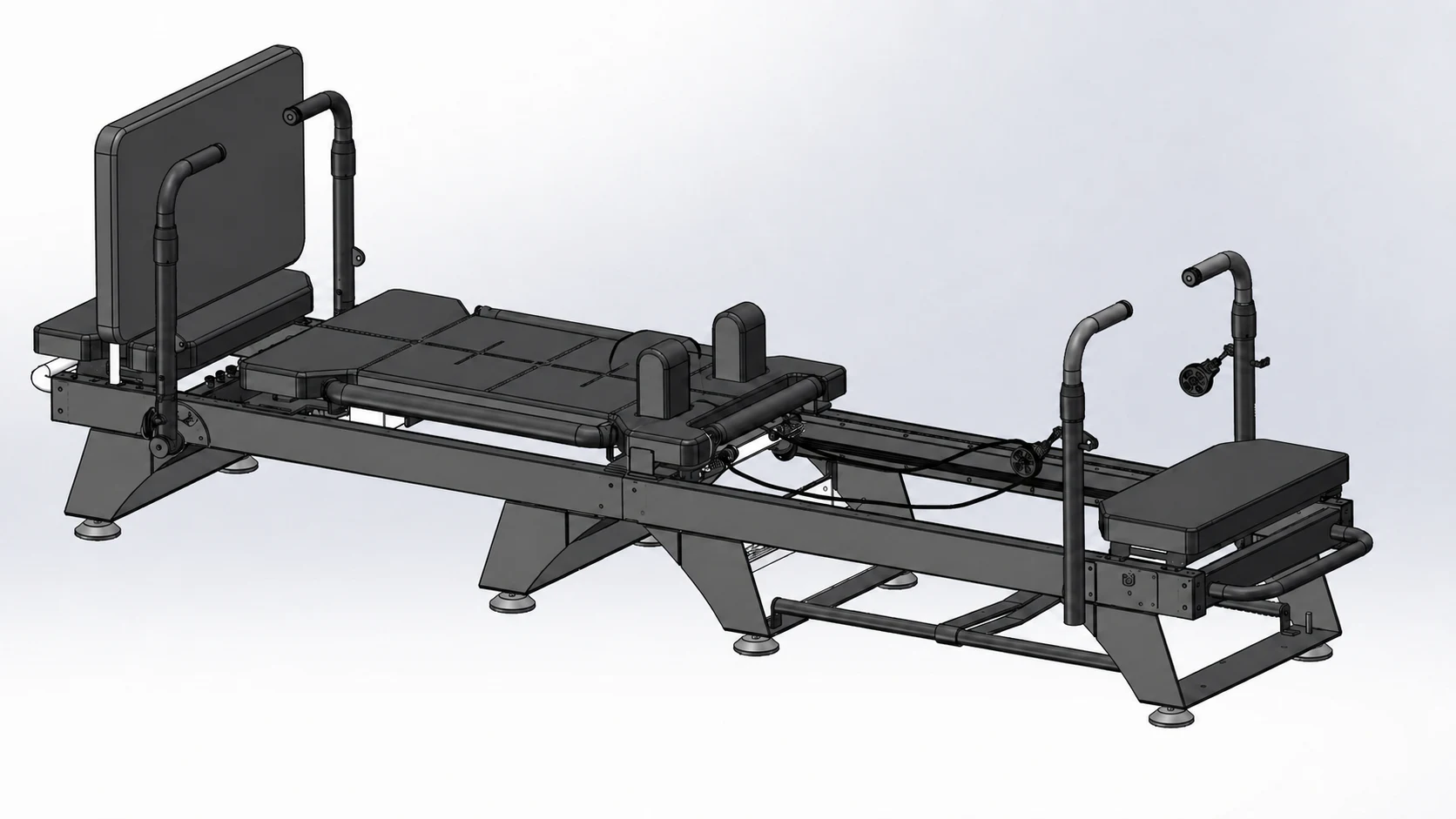
Carriage One is a full-length commercial reformer for $5,500 with freight included: two working platforms, an eight-spring set (2 × 5 lb, 2 × 11 lb, 2 × 26 lb, and 2 × 88 lb), a 10-year frame warranty, and wear parts stocked in Utah.
Buy Carriage One for $5,500Carriage OneMade for the class floor
Full working layout
Exact footprint
Direct support
Clear buying terms
Compare commercial reformers from $5,000
Choose the model that fits your class floor. Each price includes standard freight; sales tax is extra.
Full-length, dual-platform designCarriage One · $5,500128 in × 26 inSee specifications and buy online →Shorter 9 ft 2 in footprintCarriage One S · $5,0009 ft 2 in × 2 ft 2 inSee specifications and buy online →Distinct frame and platform silhouetteCarriage X · $5,500A distinct Carriage design, available to buy direct.See specifications and buy online →
Built for the pace of a studio
The equipment, warranty, and ownership support all matter after opening day.
Powder-coated steel, commercial vinyl upholstery, and a published commercial-use warranty.
A long moving carriage, two working platforms, straps, raised handles, and eight published spring ratings.
Published dimensions make it easier to map a single station or a full class floor.
Get care guidance, replacement-parts help, and warranty support from The Carriage Co.
Standard freight is included. Typical built-to-order production is 8–12 weeks.
Carriage is run from a studio operator's perspective, with common wear parts stocked in Utah.
Why studios choose commercial equipment
A class floor needs equipment selected for repeated use, multiple instructors, and consistent room layouts.
| Criteria | Commercial studio reformers | Home reformers |
|---|---|---|
| Primary buyer | Pilates studios, strength studios, fitness clubs, hotels, and commercial wellness rooms | Individual home users and personal practice spaces |
| Daily use | Built and planned for repeated classes, multiple instructors, and frequent transitions | Designed around lighter personal use and space-saving convenience |
| Footprint | Published machine dimensions make multi-station layouts easier to see | Published dimensions show the space required for one full-length machine |
| Ordering | Buy one or several machines online and confirm delivery details before production | Direct product checkout or consumer financing |
| Programming model | The studio sets its own class names, coaching standards, schedule, and pricing | The owner chooses instruction and programming for personal use |
Choose your model. Choose your count. Buy online.
The buying path stays simple, whether you need one machine or a full room.
Choose your quantity
Buy one machine or plan a full 8–12 station class floor at the selected model's published unit price.
Choose your Carriage
Open each model to see its available photos, dimensions, specifications, warranty, and price.
Buy online
Select the quantity and check out securely. Typical built-to-order production is 8–12 weeks.
Meet Carriage One
Full-length, dual-platform commercial equipment for slow, high-tension strength classes.
Reformer instructor trainingExplore onsite and virtual education with Exercise Strength Core for your teaching team.Buy Carriage One for $5,500See the machine, 128 by 26 inch footprint, included components, 550 lb rated user load, and warranty.Shop all reformersCompare the current Carriage models and buy online.Plan an 8–12 machine class floorSee equipment subtotals for eight, ten, and twelve Carriage machines.Compare published buying termsSee how Carriage One sits next to other commercial reformers on price, warranty, and delivery.Judge commercial qualityUnderstand width, bearings, loaded-machine testing, parts, warranty, and studio-use evidence.Equipment for hotelsPlan a commercial reformer amenity for a hotel or resort.Equipment for multifamily fitness roomsPlan a reformer amenity for an apartment or residential property.Warranty and deliveryRead about production, delivery, warranty coverage, and parts support.
Commercial reformer questions
What is a commercial Pilates reformer?
A commercial-grade Pilates reformer is specified for repeated daily classes with multiple instructors: a published frame and rated user load, cleanable upholstery, exact dimensions, and a written warranty with a parts path. Carriage One, for example, has a powder-coated steel frame, a 550 lb (250 kg) rated user load, and commercial vinyl upholstery, and costs $5,500 with standard freight included.
Where can I buy a commercial Pilates reformer?
The Carriage Co. sells commercial Pilates reformers through direct checkout at shopcarriageco.com/products: Carriage One and Carriage X at $5,500 and Carriage One S at $5,000 per machine, each including standard freight. Stripe adds destination-based sales tax. You can also fund the order through your own bank or lender.
How much does a commercial Pilates reformer cost?
Carriage One S costs $5,000. Carriage One and Carriage X cost $5,500 each. Every published machine price includes standard freight, with destination-based sales tax added at checkout.
How many reformers does a new Pilates studio need?
Your room and class size set the count. Carriage reformers are sold individually, so you can choose the exact quantity and see the equipment subtotal online.
How does Carriage One compare with Sculptformer and XFormer?
Carriage One has the lowest published price of the three: $5,500 with standard freight included, versus Sculptformer's listed $8,499 and no published XFormer price (checked September 27, 2026). Across ten machines that is $29,990 less than Sculptformer at listed prices, before seller volume discounts. Sculptformer advertises free white-glove delivery and installation for orders placed before October 31, 2026 (checked October 7, 2026); confirm eligibility.
Can I finance Carriage reformers?
Yes, through your own bank or equipment lender. The Carriage Co. acts as equipment vendor of record: we issue the invoice, accept lender payment, coordinate fulfillment, and handle support and warranty. The unit price is the same at one machine or twelve, so your lender sees the exact subtotal up front.
Should a studio buy home reformers or commercial reformers?
Choose commercial equipment for scheduled classes, multiple instructors, and repeated daily use. Home reformers are designed around personal practice and storage.
What should I compare before buying a commercial reformer?
Compare the exact model, working surfaces, dimensions, included components, price, warranty, production range, maintenance, and parts support.
Can commercial Pilates reformers be customized?
Yes. Carriage One ships with the Standard Platform by default; the Full or X Platform, available finishes, and strap options are confirmed after purchase and before production.